
Tarot Spreads & Practice
Understanding the Limitations of a Single Card Tarot Reading
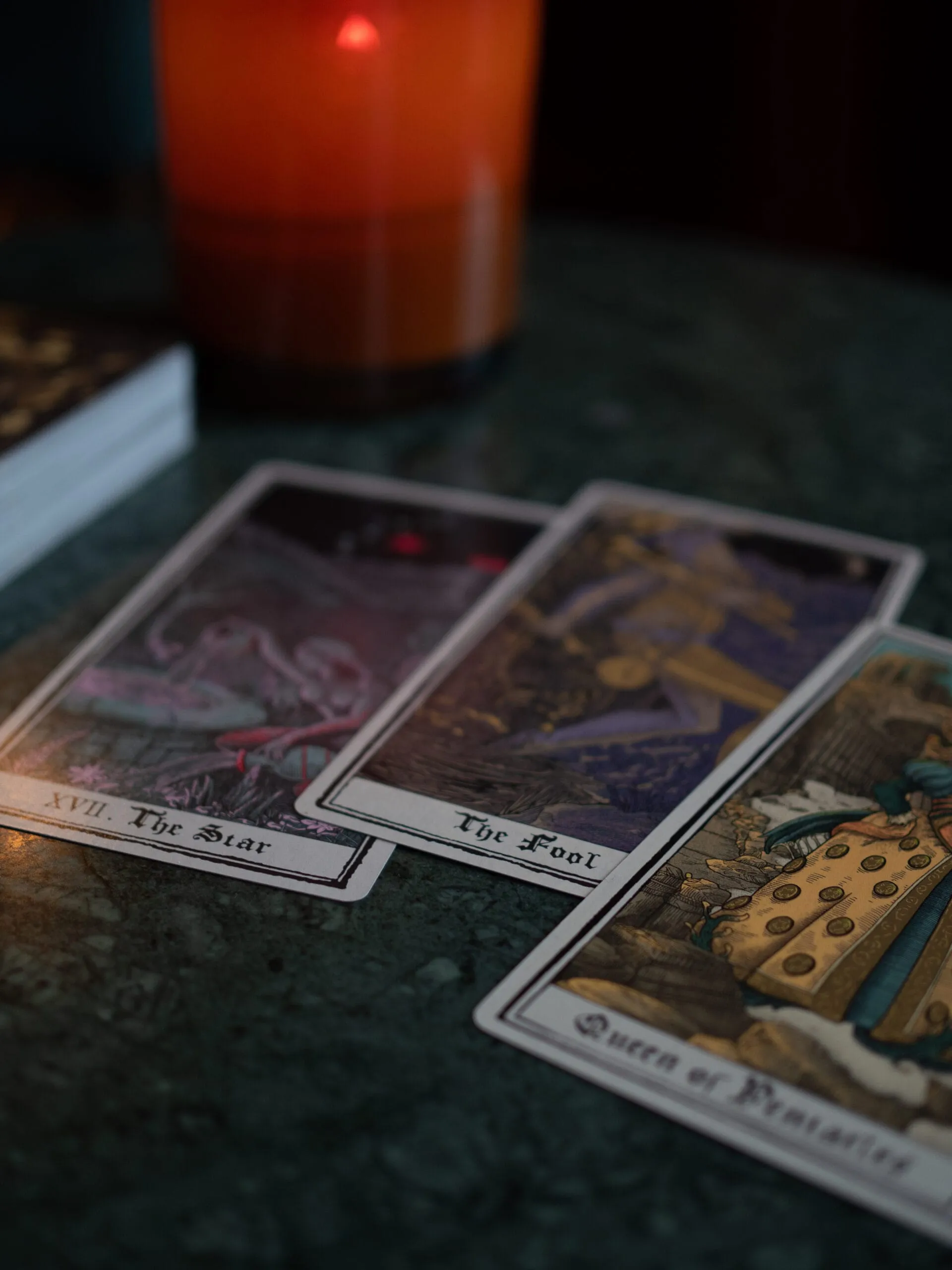
A single card is how most people start, and for plenty of questions it is enough. Pull one card in the morning, sit with it for five minutes, and you have something to carry into the day. The trouble starts when one card is asked to hold a decision it cannot carry: a relationship that keeps going round in circles, a move abroad, a question about the next two years.
This article looks at where a one-card reading works, where it runs out of road, and what to do instead.
What one card can do
A single draw gives you a snapshot, which is exactly what a short question needs. What should I pay attention to today? Where am I stuck on this? Where should I put my energy this week? One card answers those without asking you to hold six positions and their relationships in your head at once.
You can draw a free card here if you want to practise noticing your first response before reading the full meaning.
It also suits the way people actually use tarot day to day. A daily draw builds a relationship with the deck faster than a monthly Celtic Cross, because you see the cards often and in small doses. If you are learning, or if you have ten minutes between two meetings, one card is the sensible choice.
Where a single card runs out
When someone brings a situation with several moving parts, one card tends to flatten it into a single message. It may land on one part of the problem and leave the rest untouched, which can be worse than no reading, because it sounds like a complete answer.
Questions about long patterns, such as how has this repeated for ten years, need more than one position. They are questions about sequence, and a sequence needs somewhere to unfold.
There is also no counterweight. With one card there is nothing to check your reading against: if the card is vague, you have no second card to sharpen it, and if you have already decided what you hope to hear, nothing in the spread will push back. In a bigger spread, the awkward card sitting next to the comforting one does that job for you.
The card is not the whole reading
A single card carries a great deal on its own: the figures, the colours, the numbers, the objects, and the scene they make together. What a spread adds is qualification. Two of Swords beside the Tower does not mean what Two of Swords means in the abstract, and a card read in a position marked fear means something different from the same card in a position marked outcome.
Without neighbours, the reader has to supply that missing context out of intuition and whatever they know about the person in front of them. Sometimes that works. It also opens the door to reading something into the card that is not there, and a single card plus a strong imagination can produce a conclusion the card never supported.
Intuition does more work in a one-card draw
In a full spread, the structure carries part of the load. Positions tell you what each card is doing, and the relationships between cards give you something to reason with. With one card, the reader’s intuition has to do more of the work, which is why one-card readings can feel immediate and uncluttered when they go well, and unmoored when they do not.
A reader who knows the querent’s situation has an enormous advantage: the same card means something different to someone grieving a death and someone starting a business. That context usually matters more than drawing a second card.
Spreads that add what a single card cannot
A three-card spread does two jobs, depending on the positions you choose: past, present, future, or situation, action, outcome. Three cards give you a relationship to read, they fit in ten minutes, and each position does something specific. For most questions that outgrow a single draw, this is the next step rather than the last one.
The Celtic Cross uses ten cards: past influences, present circumstances, the obstacle in the way, the querent’s own attitude, and a likely direction. It is a long reading and it suits a question someone has been sitting with for a while. Used on a light question it produces noise.
Time-based spreads lay out a sequence so you can see where a situation came from, where it stands, and where it points. They are the right tool for someone asking about a pattern rather than an outcome, because the question itself is about movement over time.
Thematic spreads arrange cards around one area of life, such as work, a relationship, or money, with positions for each angle within that area. They break a broad question into parts instead of demanding a single-sentence answer to something large.
Misconceptions about one-card readings
The most common objection is that a single card cannot say much. An experienced reader can spend twenty minutes on one card, so the limit is scope rather than depth.
Another is that a single card is unreliable. On a narrow question it can be surprisingly sharp, and it is the broad question that breaks it.
Then there is the belief that more cards make a reading truer. Cards add structure and a counterweight to your own assumptions, and a ten-card spread read carelessly is still worse than one card read well.
Getting more from a longer reading
- Prepare before you shuffle. Settle on the question, choose the spread while you can still think clearly, and take a minute to sit still: a few slow breaths, phone out of reach, no rush. If cleansing the deck or the room is part of your practice, through visualisation, sage or crystals, do it before the first card, not in the middle.
- Keep the question honest. A spread will answer the question you actually asked, so check that the question is the one you mean. A question about what to do at work is a different reading from one about whether to leave.
- Ask follow-up questions. When a card raises more than it settles, draw one more and ask about that specific thing. This is often where the useful part of a reading happens, because the first cards have given you the vocabulary to ask properly.
- Read the spread as a whole before you draw more. If three cards already tell a coherent story, a fourth usually muddies it. If they contradict each other, that is worth sitting with, and it is often the reason to lay out a larger spread with positions that can hold the contradiction.
When one card is still the right call
Most readings can begin with a single card, and many should end there. If the answer raises more questions than it settles, that is the signal to lay out more. If it lands clean and gives you something to act on, you are done.