Tarot Spreads & Practice
Master Reading Tarot Cards: A Complete Guide for Beginners
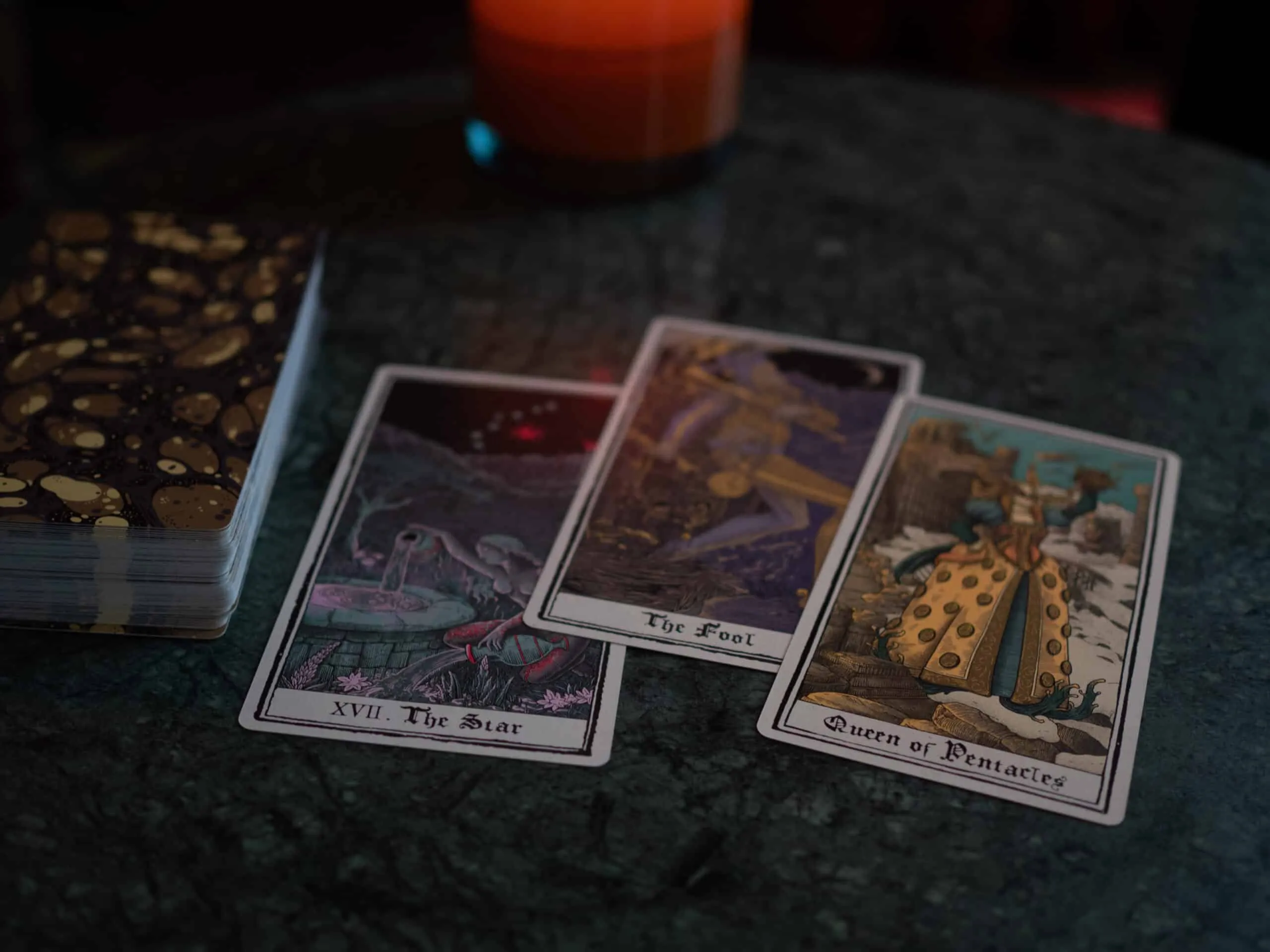
Tarot is a set of 78 pictures that gives a conversation with yourself somewhere to start. What you get out of it depends on three things: a deck whose images you connect with, a working knowledge of what the cards mean, and the willingness to trust your first reaction. Everything else you can pick up as you go.
The fortune-telling version of tarot you see in films is a small part of what the cards do. What you are working with is a structured set of archetypes, each one standing for a theme, a lesson, or a kind of energy you will recognise from your own life.
A reading can help you:
- Make sense of a situation that feels muddled.
- Notice emotions and patterns you have been avoiding.
- Spot a roadblock, or an opportunity you had overlooked.
- Get more confident about your own instincts.
Core concepts for your first reading
| Part of a reading | What it is | Where to start |
|---|---|---|
| The deck | 78 cards, split into the Major and Minor Arcana | Choose imagery you connect with, such as the classic Rider-Waite-Smith |
| The question | The situation you bring to the cards | Ask something open, like “What do I need to know about this?”, rather than a yes or no question |
| The spread | A layout where each position carries a meaning | Begin with one card or three |
| Your intuition | Your first reaction to the card in front of you | Notice your first thought before you reach for the guidebook |
You bring the question, the cards offer symbols to work with, and your own reaction is what turns the two into something useful.
If you want the history behind all this, there is more in our article on what tarot card reading is. For now, let us stay on the practical side and get you pulling cards.
Choosing your first deck
Choosing a deck is the enjoyable part. What you are looking for is a visual language you can read at a glance, not the prettiest box on the shelf. Your deck is the thing you will look at hundreds of times, so how you feel about the artwork counts for more than the reputation of the deck itself.
Flip through the cards before you buy if you can. Do the images make you want to look closer? Is there a figure you can imagine standing inside? That gut reaction is what you are shopping for. A deck that feels like an old friend will teach you faster than one that feels like a textbook.
Tarot has become noticeably more popular in Denmark over the past decade, mainly as a tool for reflection rather than prediction, and the wider European interest is moving the same way.
Start with the Rider-Waite-Smith
Most experienced readers will point you at the Rider-Waite-Smith deck, first published in 1909, and the advice holds up. Its symbolism is clear and consistent, and every card, including the numbered ones, shows a full scene.
Instead of counting seven swords and trying to remember what the number stands for, you see someone creeping away from a camp with five swords and leaving two behind. The image gives you the meaning straight away: something taken quietly, or a situation where you are not seeing the whole picture.
A deck built on this system also makes learning easier, because most books, courses, and websites use it as their reference point. You are not stuck with the original artwork either. Hundreds of modern decks rework the same symbolism with a different look.
Decks beyond the classic
The Rider-Waite-Smith is a good starting point, not a rule. If the artwork leaves you cold, you will not use it, and an unused deck teaches you nothing. There are decks built around almost every visual style, from minimal line drawings to animals, plants, and figures from myth. A minimal deck asks more of your intuition because there is less in the picture to read, while a nature or mythology deck carries much of its meaning in the subject on the card.
How to find a deck you will actually use
Look up video reviews or galleries online before you buy. Plenty of creators walk through every card of a new deck, which tells you far more than the box art does. As you watch, notice how each card makes you feel. That first reaction is your intuition telling you which imagery you will be able to read.
How the deck is organised
78 cards sounds like a lot until you see the structure underneath. The deck splits into two parts, the Major Arcana and the Minor Arcana, and understanding how they relate to each other is most of what you need to start reading.
The Major Arcana
The Major Arcana is 22 cards, numbered 0 to 21. They cover the large themes, the lessons and turning points most people meet at some stage of a life. The Fool at 0 is the step into something new without knowing how it ends, and The World at 21 is the sense of completion at the other end. In between sit the figures you will come to know well: The Lovers, The Hermit, Death, The Sun.
When a Major Arcana card appears, it usually points at something with more weight behind it than the weather of the day. A spread full of them suggests a period of real change rather than a passing mood. There is more on the split in our guide to the Major and Minor Arcana.
The Minor Arcana
The other 56 cards are where daily life lives: what you did this week, how a conversation went, the mood you woke up in. The Minor Arcana is arranged much like an ordinary pack of playing cards, four suits of ten numbered cards plus four court cards.
Each suit connects to an element and to a part of life.
| Suit | Element | Covers |
|---|---|---|
| Wands | Fire | Drive, creativity, ambition |
| Cups | Water | Feelings, relationships, intuition |
| Swords | Air | Thoughts, beliefs, communication, conflict |
| Pentacles | Earth | Money, work, health, home |
Learning these four associations pays off quickly. Once you know a card is a Sword, you already know it is about thinking, arguing, or deciding.
Numbered cards and court cards
Within a suit, the numbers tell a story. The Ace is the raw beginning, the pure potential of that suit’s energy: the Ace of Cups as a new emotional connection, or a piece of creative work starting. From there the energy develops, runs into difficulty around the Fives, and reaches a kind of completion in the Ten.
The 16 court cards can be read in three ways, and it is worth trying each when one appears. They might be a person in your life. They might be a part of yourself you are being asked to bring forward, such as the confidence of the Queen of Wands. Or they might describe the approach a situation needs from you. If it is not obvious which reading fits, say all three to yourself and see which one sounds true.
Your first reading
With a deck in your hands and the structure clear, there is nothing left to do but try it. Your first reading does not need to be good. Aim for fifteen minutes of genuine attention and you will get something out of it.
Find somewhere quiet where you will not be interrupted, then hold the deck for a moment and take a few slow breaths. That pause is what separates a reading from shuffling cards while thinking about your emails.
Framing a question
Phrase the question well and you get a better reading. Open questions that ask for guidance work; yes or no questions do not, because they ask the cards to predict something, and prediction is where they are weakest.
“Will I get the promotion?” gives you an answer and nothing to do with it. “What would help me make progress at work?” gives you something to act on, and it makes you a participant rather than someone waiting for a verdict.
A few open questions that work well:
- “What do I need to be aware of in this relationship?”
- “How can I make more room for my creative work?”
- “What is the main thing standing between me and my goal?”
Shuffling and drawing
Shuffling is more than mixing the cards. It is a few minutes of quiet attention while you hold the question in your mind. Any method works: a riffle shuffle, an overhand shuffle, or spreading the cards on the table and moving them around. Keep going until it feels right to stop.
Then draw. Cut the deck and pick a pile, or fan the cards and let your hand settle on a few. The method matters less than the intention you bring to it.
Drawing three cards
Three cards is a good first spread. It gives you enough to work with without losing the thread.
Lay them out from left to right and give each position a job. Situation, action, outcome works well:
- The situation: the energy around your question as it stands.
- The action: something to do, or a way of thinking to try.
- The outcome: what tends to follow if you take that advice.
Before you open a guidebook, look at the three cards together. What is your first impression of the scene they make? Which image draws your eye?
A worked example
Say a friend is stuck on a piece of creative work and asks the cards what they need to know. They shuffle, draw three, and get the Four of Cups, the Knight of Wands, and The Sun.
The Four of Cups shows someone sitting with three cups in front of them while a fourth is offered from a cloud, and they have not noticed it. That fits a person who is bored with what they are making and passing over the idea that is already within reach. The Knight of Wands is the charge forward: change something, take a risk, go somewhere. The Sun, one of the happiest cards in the deck, suggests that acting on the Knight’s advice leads to clarity and renewed energy.
Read together, the story is straightforward. You are uninspired because you are overlooking what is already there, and one bold move will get you going again.
Notice that no single card carried the answer. Three meanings together say more than any of them alone, which is why you are building a picture rather than reading a sentence.
Interpreting the cards
Learning the standard meanings is a starting point. After that, the cards start to work as a mirror. They reflect what is already going on around you, which is why a reading so often feels pointed. The useful part is what you notice when you look at a card before you look anything up.
Reading the imagery
Every detail on a card is there on purpose: the colours, the posture of a figure, what is happening in the background. Your own reaction to those details is part of the message.
Three questions are enough to get started. What do I notice first? How does this scene make me feel? If I were standing inside this card, what would I be doing?
You can go further with this in our article on intuitive tarot as a tool for insight.
Reversed cards
A reversed card, one that lands upside down, worries beginners more than it should. It does not automatically mean something bad. It usually means the energy of the card is blocked, turned inward, or being resisted.
The Chariot upright is movement and control. Reversed, it can describe someone pushing hard in a direction that is not working, or feeling that the reins have slipped out of their hands. The card is asking for attention.
Keeping a journal
A journal is the fastest way to get better at this. Write down the date, the question, the cards, and your first reaction before you consult anything. Add the interpretation you settled on at the end, and note which of the guidebook meanings actually fitted.
After a few months you will have something no guidebook can give you: your own meanings for the cards, formed from your own life. That is where a reading style comes from.
Questions beginners ask
A few things come up again and again when people start.
Do I have to be psychic?
No. This myth keeps a lot of people from picking up a deck at all. Tarot is a language of symbols, closer to reading a poem than to seeing the future, and like any language it can be learned. Curiosity and practice will take you further than any supposed gift.
How often should I read?
Often enough to be useful, not so often that you ask the same question over and over. Reading on the same problem every day mostly produces noise, because you will keep drawing until you get the answer you wanted.
Most readers settle into something along these lines: one card in the morning, a three-card spread at the start of the week if they feel like it, and the bigger spreads saved for decisions that matter. The right moment is when you genuinely want a fresh perspective.
What if I pull Death or The Devil?
Neither card means what the name suggests. Death is one of the most useful cards in the deck. It points at an ending that has already begun: a job you have outgrown, a relationship that has run its course, a belief you no longer hold. Ending something is how room gets made for what comes next.
The Devil tends to show where you feel trapped. An old habit, a fear you keep feeding, a story about yourself that you are tired of telling. Drawing it is a nudge towards something you could change.
Can I read for other people?
Yes, once you are comfortable reading for yourself. Self-reading is where you build the confidence to hold a question that belongs to somebody else.
Start with friends or family who are open to it, and keep a few things in mind. Ask permission before you begin. Be clear that you are offering a way to think about something rather than a verdict. And remember that your job is to help them hear their own reactions, not to supply answers for them.
At Vox Tarot, a reading is a shared process rather than a performance. If you would like a space to work through a question with someone who will listen properly, you can book a reading with me.