
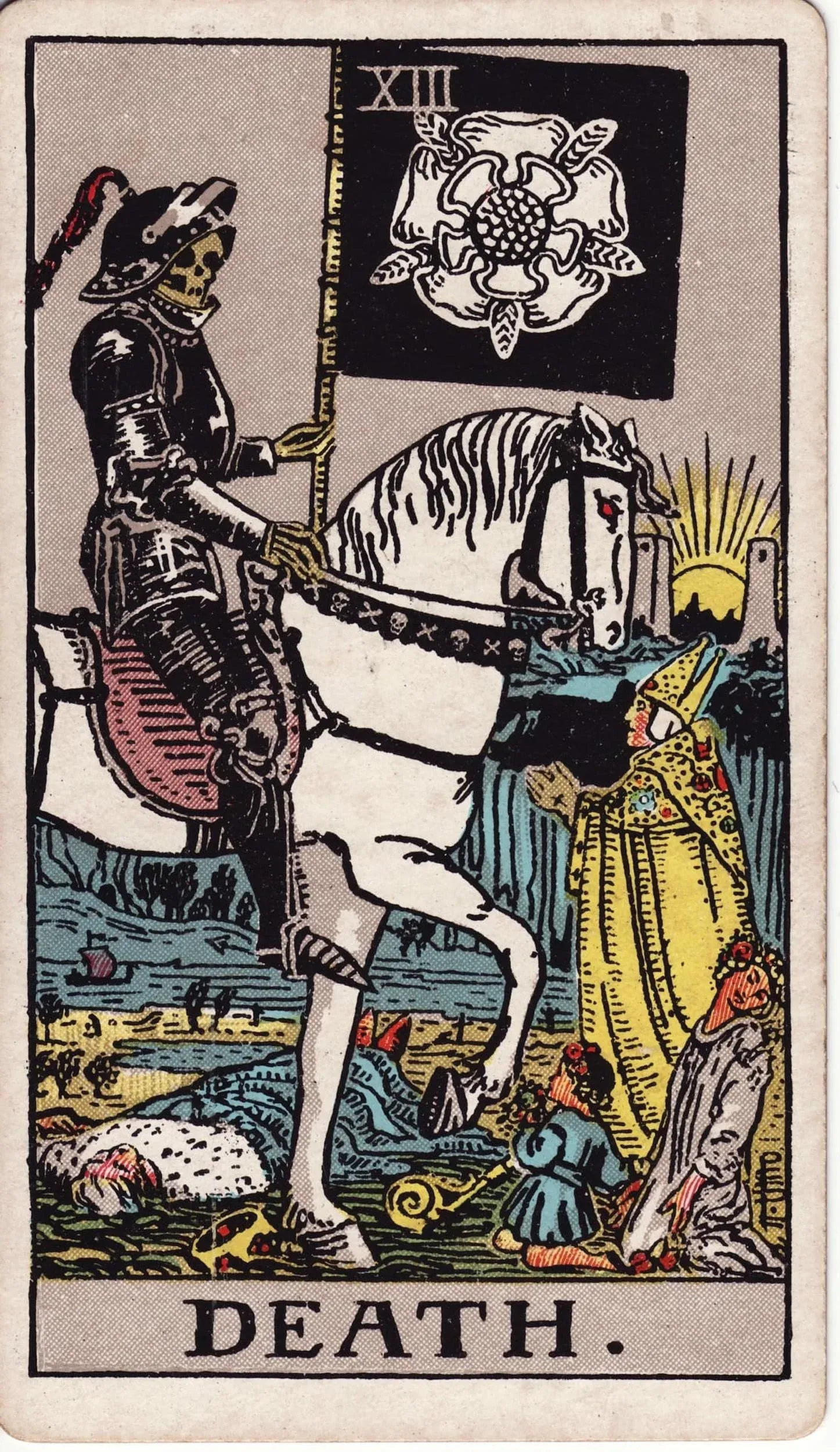
The Death card shows a skeleton in black armour riding a white horse, carrying a black banner with a white rose on it. A king has fallen beneath the hooves and a bishop stands with his hands raised, while a child and a young woman wait nearby. The sun is rising between two towers in the distance, the part people miss when they look away from the skeleton. It names a full stop: something has run its course. In a reading it usually lands on an ending you already half know about.
What Death says upright
Upright, Death is an ending that clears the ground. A habit, a relationship or a job has finished, and the card says the finish is happening whether or not you have agreed to it. That is why it feels uncomfortable. Endings of this size ask for courage and some honest looking at what you have been holding.
What it makes room for matters as much as what it takes away. Once the old shape is gone there is space for people or plans that could not have fitted before. Sadness belongs here and does not need to be argued away, but the card points past the grief to what is being built. Readings of Death often describe a period that felt heavy at the time and clearer in hindsight.
What Death says reversed
Reversed, Death is the same ending, resisted. You may be holding on to something that has already gone: a relationship that finished, a role you no longer have, a version of yourself you liked. Staying put tends to cost more than the change would. Frustration and a sense of being stuck show up alongside it.
The card asks you to let the transition happen. Naming what you are afraid of losing usually makes the next step easier to see, and release is what frees the energy you have been spending on holding on.
Questions to ask in a reading
- What has already ended that I am still treating as open?
- What am I protecting by refusing this change?
- Who would I be without the thing I am holding on to?
- What would I have to say goodbye to before I could start again?
How it reads with the other cards
Death speaks to the other cards of change. Next to the Tower it describes a sudden, unasked-for break, while beside Judgement the ending arrives with a reckoning attached. With the Ten of Swords nearby, the same idea settles into a plain finish: something is over, and the cards around it say what comes next.