
Online Tarot Readings
Your Guide to Tarot Cards Online
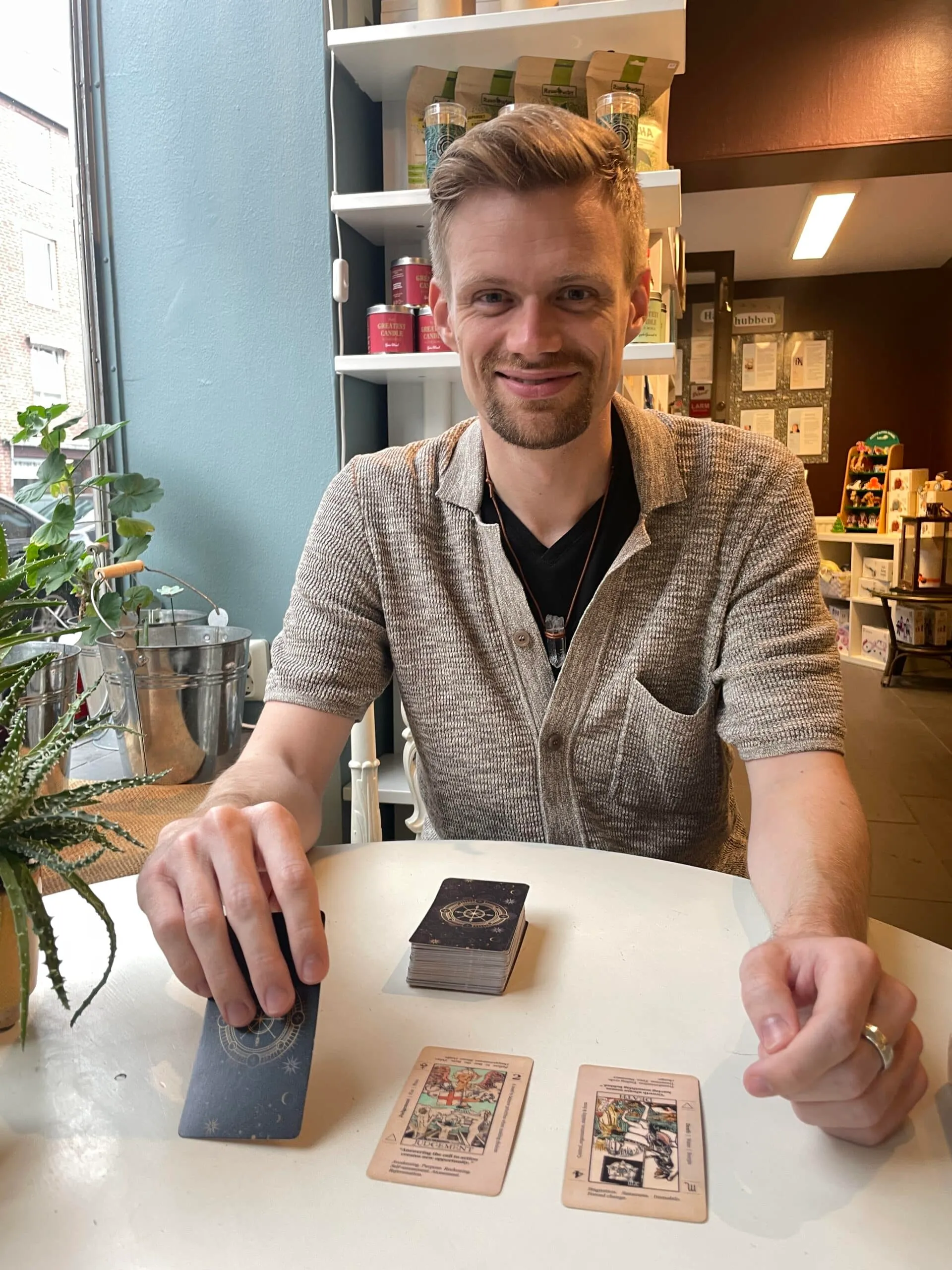
An online tarot reading is a session you have with a reader over video or email instead of sitting in the same room. You book a time, bring your questions, and the reader shuffles and lays out the cards while you talk it through. That is the whole arrangement. The rest of this page covers how a session runs, what changes when you do it from home, and how to spot a reader you can trust.
Why people book readings online
Finding a reader used to mean finding one nearby, through a shop, a fair or a friend of a friend. Now the choice is much wider, and that matters more than it sounds, because the reader you click with is often not the closest one. Reading from your own home also changes how much you are willing to say. It is easier to be honest about the thing that actually brought you to the reading when you are not sitting in a stranger’s front room. Much of the transformative power of tarot readings in the modern age comes from their ability to meet you where you are right now.
Online shops have changed what is available too. Decks are easy to find now, from small independent artists to plain beginner kits, and the tutorials and forums that come with them make the first steps much less intimidating. Verified Market Research expects the global tarot card market to reach $1.589 billion by 2030, which gives some sense of how far the practice has spread beyond the shops that used to stock it.
Some of that growth comes from a wider interest in mindfulness. People who would never have called themselves spiritual now use tarot as one more way to slow down and pay attention to themselves, and younger readers in particular treat the cards as a practical tool rather than a curiosity.
What people actually use the cards for
Most people who book a reading are not after a prediction. They bring a situation that has stopped moving: a decision they keep putting off, work that has gone flat, a relationship they cannot read clearly. The cards give that situation a shape, and for half an hour it can be looked at from the outside instead of from inside it.
Each card works a little like a prompt in a journal. You look at the picture, notice what it brings up, and follow that. Patterns that were invisible while you were in the middle of them tend to surface once someone else is asking you questions and laying cards on the table. That is the practical side of tarot, and it sits comfortably alongside the things people already do for their mental health: walking, writing, talking to a friend who listens properly.
The same shift is visible in Denmark, where online access has made it simple to find a reader without needing one in your own town.
The online tarot community
Social media has done a lot to make tarot ordinary. Readers post daily card pulls on Instagram and TikTok, answer questions, run live sessions and explain how they read. A beginner can watch a few of those before ever buying a deck.
Forums and comment sections do the rest. They give people somewhere to:
- compare interpretations of a card they pulled themselves
- find decks from independent artists, or a plain set to learn on
- get a feel for individual readers before booking anything
This is the part that has changed most in recent years. A practice that used to be taught by whoever happened to live nearby is now something you can learn alongside thousands of other people, which takes a lot of the intimidation out of the first reading.
Online sessions and in-person sessions
The two have more in common than the difference in format suggests. Both are a conversation about your question, with the same 78 cards and the same kind of interpretation. What changes is the practical side.
| Online reading | In-person reading | |
|---|---|---|
| Where you sit | Anywhere with an internet connection | You travel to the reader |
| Booking | Fits around your day, often outside office hours | Limited by the reader’s hours and location |
| Choosing a reader | Readers based anywhere | Readers near you |
| Setting | Your own space | An unfamiliar room |
| Pace | You can pause and take notes | Can feel rushed |
Some people find the comfort of their own space makes for a more honest session. Others prefer the sense of occasion that comes with going somewhere for it. Neither is a mistake.
How an online reading actually works
It is fair to ask how a reading can say anything useful when you are not in the room. In tarot the connection is not physical. A reader works from your questions and your intention, and both travel perfectly well down a video call. Think of a good phone call with a friend: the warmth and the understanding come through, and nobody worries that the line is not a room.
A reader does the same job an interpreter does. You bring the question in your own words, and they translate what the cards have to say about it back into something you can use. Beyond that, a good session is a conversation rather than a performance. You will often be asked what you make of a card before the reader tells you what they see in it, because your reaction is part of the reading.
Intention is what makes a session specific. When you arrive with a clear question, the reader has something to work with, and the cards they draw tend to land close to what you brought. It is a joint effort even at a distance.
The space matters as well. A reader’s job in the first few minutes is to make the session quiet enough for you to think out loud in, which is easier to do when you already know the room you are sitting in. Anything you say stays in the session.
What to expect from a session
Every reader works a little differently, but most sessions follow a similar shape.
- Choose a reader and book a time. At Vox Tarot you can browse and book through an online calendar.
- Sort out your question beforehand. It is worth a few minutes of thought. Open questions such as “What do I need to understand about my career right now?” open up more ground than a question looking for a yes or no.
- Meet online at the booked time. You talk through what you want to look at, and the reader shuffles and draws the cards.
- Work through the cards together. The reader explains what they see in relation to your question, and you say which parts fit and which do not. Ask for clarification whenever you need it.
What you gain from reading at home
Being in your own space is the obvious advantage. You can sit in your usual chair with a cup of tea, in clothes you would not wear to an appointment, and take your time over a sensitive question. People tend to say more when they are comfortable, and a reading is only as useful as the question behind it. There is no unfamiliar room to find your way to, no awkward first few minutes, and nobody waiting for the session to end so they can lock up.
That matters most for the questions people find hardest to say out loud, which are often the ones worth asking.
Scheduling is the other practical gain. Early mornings and late evenings are both possible, and there is no journey to build into your day.
Live video or written report
Readers set up their sessions differently, and it is worth knowing which format you are booking.
- A live video call suits most questions. You can have a proper conversation, follow up on something as soon as it comes up, and watch the cards being laid out rather than reading about them afterwards.
- A written report suits people who prefer to sit with a reading before responding to it. You send your question in advance, the reading arrives by email, and you can go back to it weeks later and notice what you missed the first time.
Some readers offer both, and the same reader can feel very different depending on which you choose.
Choosing a reader you can trust
A reader’s website is a reasonable place to start. Look for a clear account of how they work and what a session involves, and for some sense of the person behind it. Prices matter less than clarity here. A reader who explains how long a session runs, what they do and what they cannot help with is telling you more than a polished front page ever will. Pages that are heavy on decoration and thin on explanation are worth leaving.
What reviews tell you
Client reviews are more useful than star ratings. Read a few in full and see whether people mention feeling heard, whether the insights matched what was going on in their lives, and whether they came away with something to work with. Three specific, detailed reviews tell you more than a page of short compliments, because a short compliment says nothing about what it feels like to sit in session with someone.
Red flags
An ethical reader gives you perspective and leaves the decisions with you. Be wary of anyone who:
- promises a specific outcome, such as getting a particular job
- tells you that you are cursed, or that something has to be removed from you
- pushes you towards expensive follow-up work or spells to fix a problem
None of that has anything to do with reading tarot well. Our guide to finding online tarot readings that are truly accurate goes into this further.
Finding someone you click with
Many readers post readings and answer questions on social media, which is a quick way to get a feel for how they work before you book. Shorter introductory sessions are common too, so you can try someone without committing to a long appointment. MysticMag reports that around 1 in 5 people (22%) in Western countries have consulted a psychic or online tarot reader, so there is plenty of choice. You can read more about the growing interest in psychic readings at MysticMag.com. Trust your own reaction: if a reader’s manner leaves you feeling calm and taken seriously, that is a good sign.
Questions people ask about online readings
The one that comes up first is whether a reading can work when the two of you are not in the same room. It can. Tarot works through attention and intention, and neither of those needs you in the same building.
Are online readings as accurate as in-person ones?
Accuracy depends on the reader’s skill and the clarity of your question. A good reader is as useful on a video call as in a room, and some people find the format suits them better, because being at ease in their own home makes them more willing to talk. The session itself is unchanged: the same cards, the same care in interpreting them, the same conversation about your question. There is more on this in our guide to evaluating the accuracy of online tarot readings.
How should I prepare for my first reading?
A few minutes of preparation makes a difference:
- pick somewhere you will not be interrupted for the whole session
- decide what you want clarity on, and write it down if that helps
- frame the question so it invites more than a yes or no
- keep a notebook or a notes app open, because you will forget the details afterwards
Walk in with a clear head and something specific to ask about, and the reading has somewhere to go.
What kind of questions work best?
Almost any area of life is fair game: work, relationships, changes you are weighing up, creative blocks. Questions that begin with what, how or why tend to produce more than questions asking for a prediction. Instead of “When will I find a new job?”, try “What can I do to move towards work that suits me better?” This shifts the session from a forecast to something you can act on, and it leaves you in charge of what happens next. If you are not sure how to phrase a question, say so at the start of the session and work it out together. A reader would rather spend five minutes getting the question right than interpret a vague one for half an hour.
At Vox Tarot, Mark reads tarot online. If you would like to work through a question of your own, you can book a reading at https://voxtarot.com.