
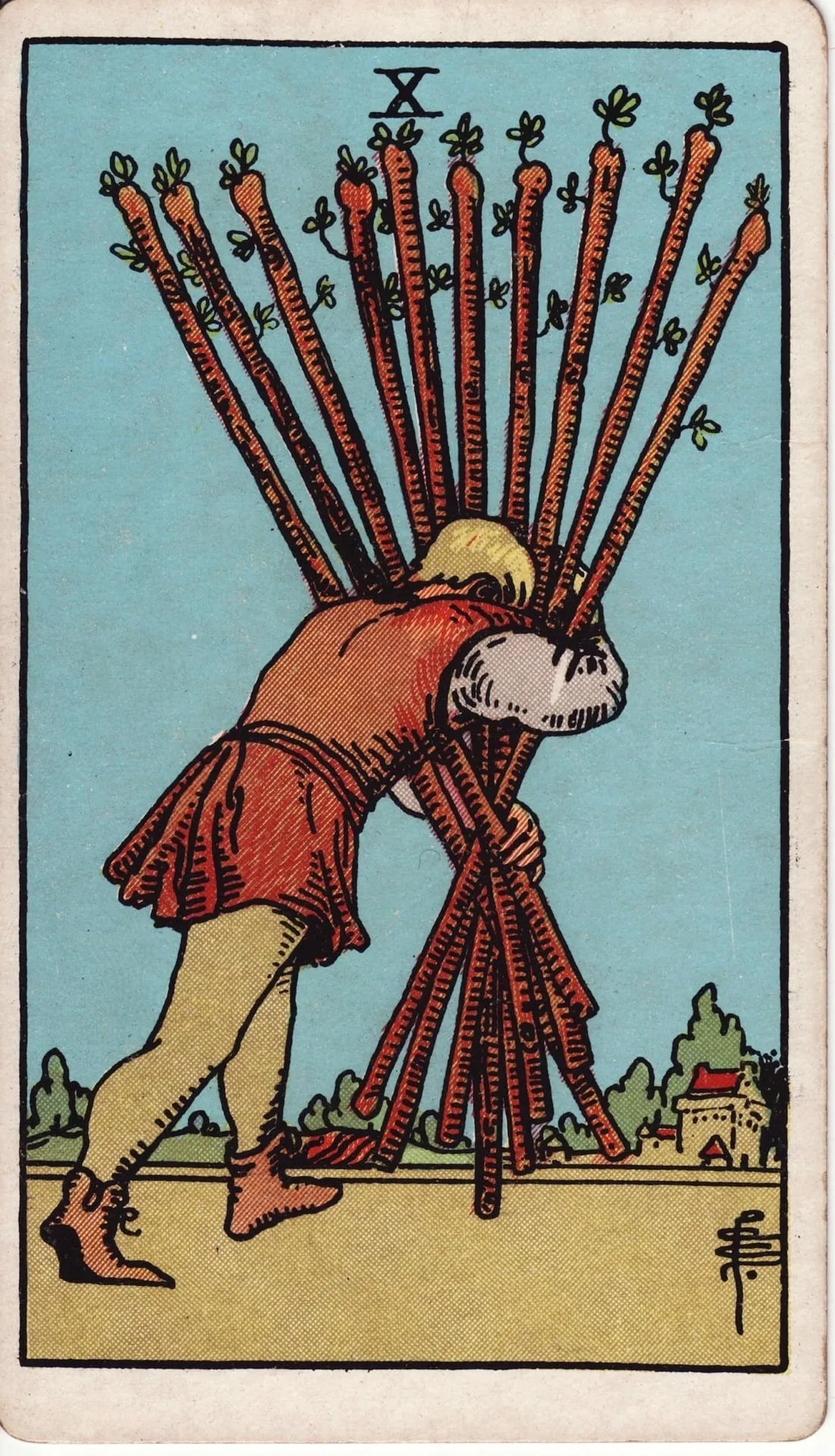
A figure walks away from the viewer, arms wrapped around a bundle of ten wands. The load is tall enough to hide most of the path, and a village is visible in the distance. The last few steps are the hardest, and the Ten of Wands names exactly that stage: the work is nearly done and it has become almost too heavy to carry. It shows up when someone is doing everything themselves, past the point where it was a choice.
What the Ten of Wands says upright
Upright, the card describes overload. Too many commitments, every one of them reasonable on the day it was made, now arriving at once. You may be the person everyone hands things to, or the one who will not hand anything on.
Wands carry will and effort, so the weight here is the weight of your own ambition as much as anyone else’s demands. The upright card also honours what has been done. Something real is being built, and it is being built because you kept going.
Three things to look at when it appears:
- which commitment made sense when you agreed to it and no longer does
- whether the load is genuinely yours or has drifted onto you from elsewhere
- where the week has no slack at all
What the Ten of Wands says reversed
Reversed, the bundle comes down. Sometimes that is a release: you delegate, or admit you cannot carry it. Sometimes it is collapse, with the exhaustion catching up before you chose it.
The reversal also covers the refusal to let go. If you are still holding a responsibility that ended months ago, the card names that pattern plainly. Asking for help is the obvious move here, and a reading usually suggests naming one task and giving it to one person.
Questions to ask in a reading
- What are you carrying that someone else could carry?
- Which of these commitments made sense when you agreed to it?
- What would you drop if you were honest about your energy?
- Who could take one task off you this week?
How it reads with the other cards
Beside the Nine of Wands, the Ten reads as exhaustion reached at the end of a fight you already won. With the Six of Wands it points to the reward, and the reading usually asks whether the recognition is worth the load. The Four of Swords nearby turns the whole thing into advice to stop.