
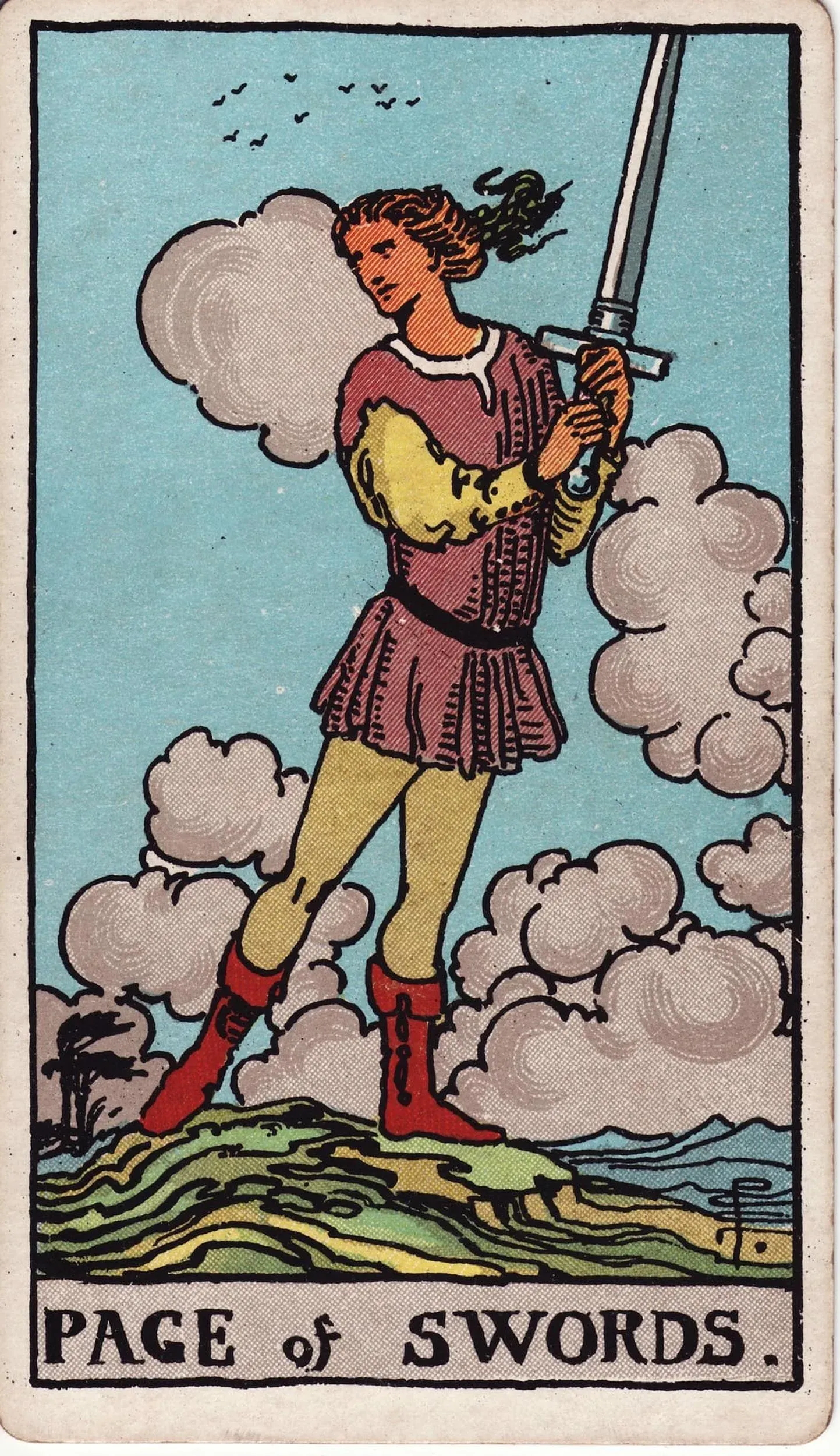
A young figure stands on rough ground with a sword held in both hands, hair and clothing pushed sideways by the wind. Birds wheel overhead and the sky is full of movement. The stance is alert rather than aggressive, the sword up and ready but not swung. In a reading, the Page of Swords names the first stage of knowing something, the point where curiosity is doing the work. Questions get asked before the answers exist, and talking is part of thinking.
What the Page of Swords says upright
Upright, this is a card about learning and watching. It suits the start of a course, a new interest, a piece of research, or a conversation that opens something up. It often shows someone who notices small inconsistencies and cannot quite help pointing them out.
Communication is the other half of it. The Page carries messages for the suit, so it turns up around letters, emails, interviews, and writing of any kind. It nudges towards saying the true thing plainly rather than the polite thing slowly. Words land better when they have been checked first, and the Page is honest enough to be inconvenient.
What the Page of Swords says reversed
Reversed, the same quick mind gets careless. This is gossip, half-checked information passed on as fact, arguments held for the pleasure of winning, or a great deal of talk with very little behind it. Sometimes the card describes the other side of that: somebody so anxious about how a question will land that they never ask it.
In readings about work or study, it warns of scattered effort, ideas started and dropped. It can also point to a message that was misread, or information that arrived secondhand.
Questions to ask in a reading
- What question am I avoiding asking?
- Am I gathering facts, or collecting arguments?
- What have I repeated lately without checking it?
- Where would writing this down change what I say?
How it reads with the other cards
The Ace of Swords carries the same sharpness without the youth, so the pair often points to a clear idea that has not been tested yet. Beside the Magician, the Page of Swords turns questions into work somebody actually does. With the Eight of Swords, the quick mind becomes its own trap and the reading moves towards anxiety rather than curiosity.