
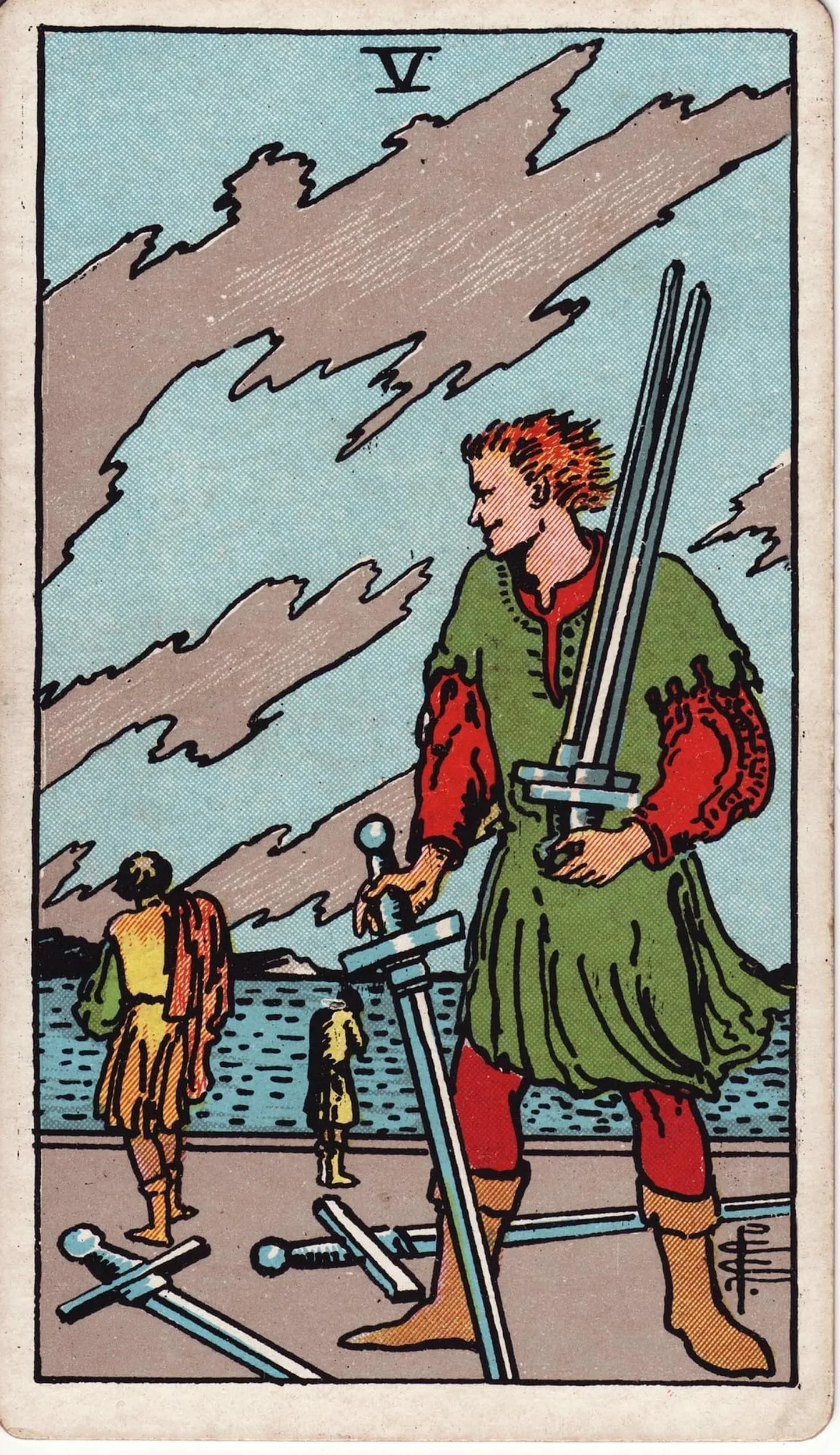
A man stands in a grey field holding three swords, watching two figures walk away in the distance. Two more swords lie on the ground behind him. He has won the argument and kept the weapons, and there is nobody left to talk to. In a reading this card names a conflict somebody is determined to win, and the loneliness that follows a victory of that kind.
What the Five of Swords says upright
Upright, the Five of Swords points at a fight that has gone past its original subject. It turns up in workplaces with sides, in family arguments that flare at every gathering, and in private feuds where being right has become more important than the relationship. Someone is playing to win, and the tactics have moved into gossip, point scoring and remarks aimed to wound.
The card also asks about your own part in it. A win that leaves you standing alone in a field is still a win, and it costs more than most people expect. Whatever gets settled this way will be remembered long after everyone has forgotten what the argument was about. Around conflict like this, people start editing what they say at meetings and family dinners, and that is damage of its own.
What the Five of Swords says reversed
Reversed, the card usually points towards resolution. Somebody decides to stop, an apology is offered, or the people involved find a way to work together again. It often arrives after the worst has passed, once the argument has lost its heat and rebuilding looks possible.
It can also describe a conflict that has gone underground. Nothing is being argued about openly any more, and the resentment is still there. A third reading is plain exhaustion, where everyone is too tired to keep scoring points.
Questions to ask in a reading
- What did I actually gain from being right?
- Who walked away while I was busy winning?
- Is this still about the original disagreement, or about who gets to be superior?
- What would I have to admit for this to end?
How it reads with the other cards
With the Two of Swords it shows a standoff where both sides have stopped speaking. Next to the Ten of Swords it reads as the end of a fight that ran all the way down. Beside the Six of Wands it reads very differently, because that card shows a victory everyone is able to celebrate.