
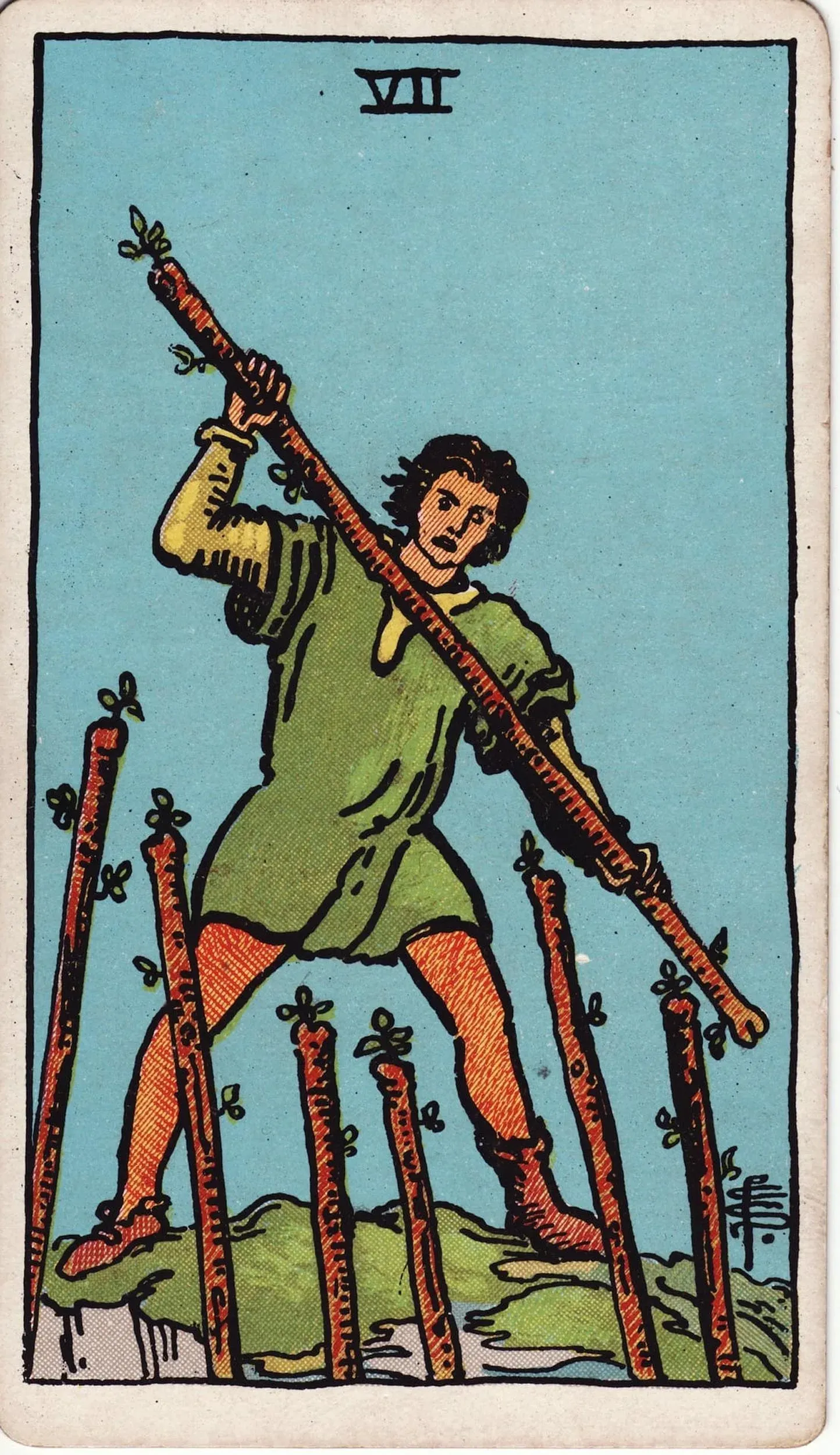
The Seven of Wands shows a figure on higher ground, with one wand held across the body to fend off six more that rise towards him from below. The people holding them are off the card, so all you see is the fight and the effort of staying in it. His shoes do not match. In a reading the card names a position you have taken that others are now testing, and the stubborn work of keeping it.
What the Seven of Wands says upright
Upright, this is about defending something you have already earned. The wands below push up at a position you hold, and the question is whether that position is worth holding. Usually it is. If you have built something, learned something, or changed something in your life, the card says the pushback was always going to come, and it is not evidence that you were wrong.
It tends to appear when the opposition is ordinary: an editor who wants changes, a colleague who questions your method. The advice is to answer the specific objection, keep your tone level, and decline the invitation to argue the whole case again for every new critic.
What the Seven of Wands says reversed
Reversed, the pressure is winning. You may feel outnumbered, tired of explaining yourself, or unsure whether the thing you have been defending still deserves the effort. That last reading matters, because the reversed card is sometimes less about losing a fight than about realising you no longer want the prize.
It can also point to a defensive habit, where everything lands as an attack and you stay braced even when nobody is pushing. Before the next exchange, ask whether you are tired of arguing in general or tired of this argument in particular, and act on the answer.
Questions to ask in a reading
- What exactly are you defending here, and who benefits if you win?
- Which objection is the serious one, and which ones can you let pass?
- Are you tired of the argument, or tired of this argument in particular?
- What would change if you moved this fight somewhere easier, or dropped it?
How it reads with the other cards
Beside the Five of Wands, the conflict is messier and less personal, a scrum where everyone argues at once with no clear target. The Six of Wands follows the Seven well, since recognition tends to arrive after you hold your ground. With the Nine of Wands the reading turns to stamina and asks how much you have left.