
Relationships & Tarot
Tarot Card Reading for Relationships: Spreads and Tips
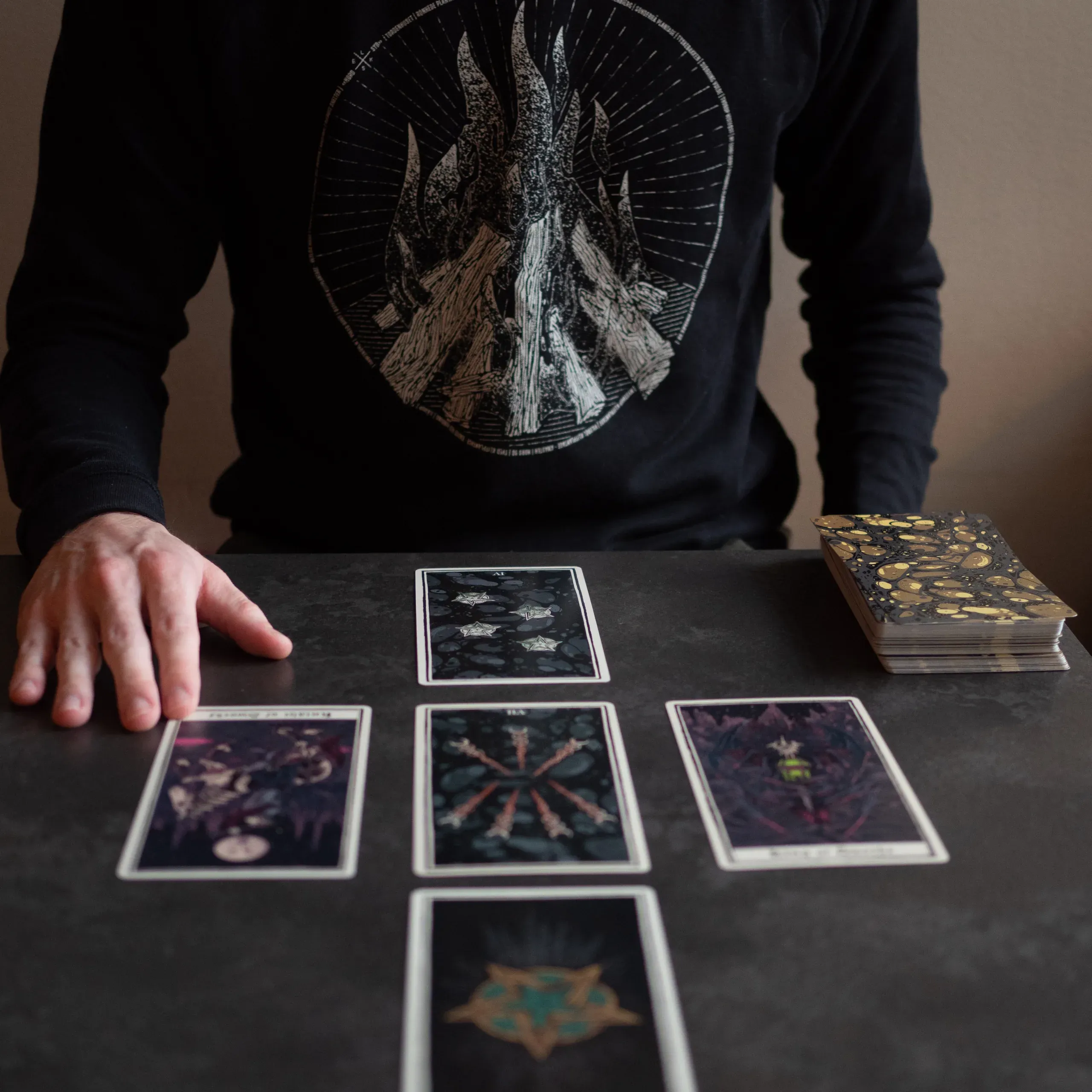
When a relationship is going badly, it is hard to see it clearly. You are inside the situation, not looking at it. A reading gives you something to look at from the outside: images that reflect the patterns you keep missing and the choices actually in front of you.
This guide covers spreads for the problems that come up most often, what the harsher cards tend to mean, and how to turn a reading into a conversation or a decision.
If you want to reflect on a relationship question with Mark, see how a private relationship reading works. The session stays with your own experience and choices; it does not claim to reveal another person’s private thoughts.
What relationship tarot can and cannot do
A spread is a layout with fixed positions, and each position asks a question: what is happening now, what sits underneath it, what would help. The position decides what the card is answering, which is why the same card reads differently in a three-card spread and a ten-card one.
Tarot does not predict a fixed outcome, and it cannot tell you what someone else is thinking. Most readers use the cards as a psychological tool rather than a fortune-telling device. The images prompt associations, often things you half knew and had not said out loud, and that is where the value is: you get language for a situation you have been circling for weeks.
Getting ready to read
Find a quiet moment
Sit somewhere you will not be interrupted and take a few slow breaths. You do not need candles or a ritual, just enough quiet to notice what you feel when a card is turned over.
Ask a question you can act on
Will they leave me? shuts the reading down. What do I understand about how we talk to each other? opens it up. Yes and no questions tend to feed the anxiety you brought in.
Keep the question on your own side of the fence. Ask how you can show up more honestly, rather than what your partner is thinking about you.
Limiting questions and the version worth asking instead:
- Will we get back together? Try: what am I meant to learn from this relationship?
- Is my partner cheating? Try: how do I deal with my own trust problems?
- Are we soulmates? Try: what does this connection teach me about love?
Use one deck for these readings
Using the same deck each time builds your own sense of what each card means to you. The Rider-Waite deck is a common starting point, since its images are clear and its meanings are well documented, but any deck you like will work.
Spreads for the usual problems
Three cards for a communication breakdown
One card for what you are not hearing, one for what your partner is not hearing, one for the bridge between the two. The layout puts both sides in the picture: misunderstandings are rarely one person’s fault, though the share is rarely even either.
Five cards for trust
The foundation of the trust, the worry you are carrying, the current obstacle, your own inner knowing, the way forward. Read your own feelings and behaviour here. Digging for evidence of what your partner has done in private is a different exercise, and not one the cards suit.
Five cards for a broken heart
What to release, what the relationship taught you, where your strength is, who and what supports you, what is starting to emerge. Grief moves slowly and the cards will not hurry it along. They help you name what you lost and see that an ending cleared space, even if that only becomes visible months later.
Seven cards for stay or go
Benefits of staying, challenges of staying, benefits of leaving, challenges of leaving, your deepest truth, outside influences, the highest good for everyone involved. The spread does not pick for you; it stacks up what you are weighing, including the parts you keep skipping.
Four cards for self-love
Recognising your worth, letting go of self-criticism, being more honestly yourself, practising some self-compassion. Plenty of relationship trouble starts in patterns that were there long before the relationship was. Work on your relationship with yourself and the others often improve on their own.
When a difficult card turns up
Harsh cards are not omens. They describe something you already sense and have been avoiding.
Three of Swords and Five of Cups
The Three of Swords is heartbreak that clears the ground. The Five of Cups is grief with two upright cups still standing, which is the part people miss. The Three of Swords often appears when you are finally ready to drop an illusion that was stopping real intimacy.
Ten of Swords and The Tower
The Ten of Swords is the bottom of the pit, and there is a dawn in the image. The Tower is a structure coming down because it was never stable, which feels like chaos while it happens. Both tend to appear when you have outgrown a situation, and the Tower says the change is happening whether you cooperate or not.
The Lovers reversed and Two of Cups reversed
The Lovers reversed points at values or choices that have fallen out of line with each other. Two of Cups reversed is a connection that has gone quiet and needs effort again. Neither means the relationship is finished; both ask what you compromised without really agreeing to it.
Seven of Swords and The Devil
The Seven of Swords is deception or self-deception, including the version where you are both the one being lied to and the one doing the lying. The Devil is an unhealthy pattern or an attachment you cannot quite break. Feeling trapped is often the Devil’s invitation to check how trapped you actually are.
Strength and Temperance
Strength is patience and courage over a long stretch. Temperance is slow repair through balance. Neither offers a quick fix, and both turn up to say the work here is steady rather than dramatic.
Meanings in a relationship reading, for quick reference:
- Strength: patient love, courage, keeping your own destructive reactions in check
- Temperance: gradual healing, balance, finding middle ground
- Seven of Swords: hidden truths, self-deception, a call for honesty
- The Devil: unhealthy patterns, feeling stuck, drama you keep re-entering
Working through a stay or go reading
An example: deciding whether to continue a relationship, using the seven-card crossroads spread.
Set the intention and shuffle
Say what you are asking: I want clarity about my best path here. Shuffle until it feels finished, whether that takes thirty seconds or three minutes. Some readers wait for a card to fall out, others stop when their hands slow down.
Lay out the cards
Lay the seven cards in a cross, using the positions above, and look at the whole spread before you read a single card. Does it feel heavy or light, calm or restless?
Read the patterns
Count the suits: lots of Cups means emotion is running the show, lots of Swords means the argument is happening in your head. Watch for repeated numbers and for two cards saying the same thing twice. If the challenge of staying echoes your deepest truth, the echo is worth more than either card alone.
Write it down
Note your first reaction to each card before you look up the meaning; first instincts hold more than they get credit for. Then write one action next to the reading. If communication is the theme, that action is a conversation with your partner.
Turning a reading into something you can use
Say it as an I-statement
Translate the reading into your own experience rather than an accusation. Instead of the cards showed me you have been lying, say: I have been feeling uncertain about how we talk, and I would like to understand it better.
Set boundaries and make agreements
If the cards keep pointing at energy drain, decide what limit protects you without withdrawing your affection. Make agreements rather than ultimatums, whether that is a weekly check-in or an evening apart each. Treat them as experiments you will review, not rules.
Mark an ending properly
Small ceremonies help when something is over. Write down what you learned and what you are letting go of, then burn the paper. Or pack the objects that matter into a box and put them somewhere deliberate. What matters is that the ending gets noticed.
FAQs about relationship tarot
Can I read cards about my partner without their permission?
Reading about your own feelings and your own part in the relationship is fine. Reading to find out what your partner privately thinks or has done is not, and the answers will not be reliable anyway.
How often should I ask about the same issue?
Leave time between readings on the same question, a week or a month, so something can change in between. Pulling cards every day keeps you analysing instead of acting.
Will tarot tell me whether my relationship will work out?
The cards describe the current situation and where it is heading if nothing changes. They cannot promise an outcome, because both people are making choices. Use a reading to understand what you are dealing with. It will not guarantee what someone else does.
If you want a second pair of eyes on something you are too close to see clearly, you can book an online reading and take it from there.